
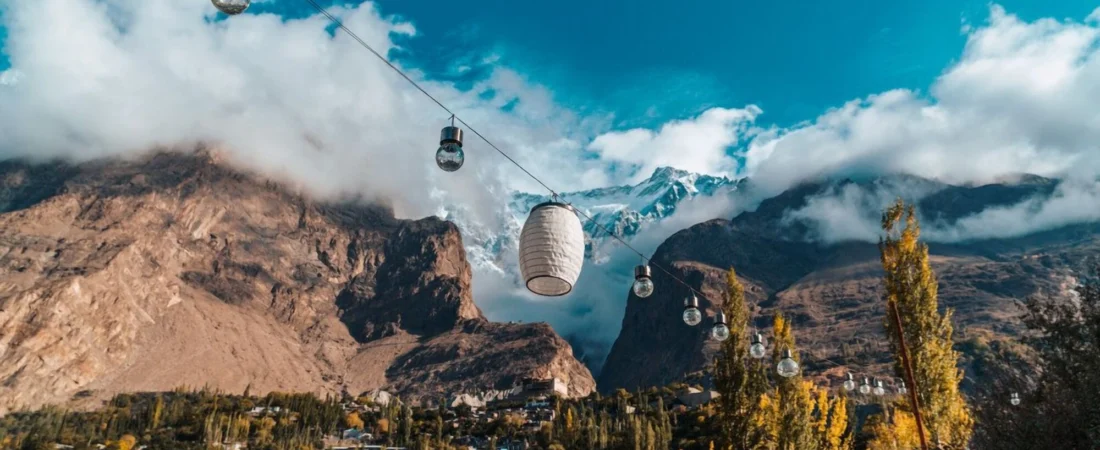
Planning a trip to Hunza or Skardu as autumn turns into winter? The transition can bring clear mountain views, quieter villages and dramatic seasonal landscapes, but it also calls for more careful planning. Daylight shortens, temperatures fall quickly after sunset, and weather or road conditions can change the plan with little notice. This guide explains how to prepare for the seasonal shift without assuming that a particular road, pass or attraction is open.
Use this as a practical planning resource rather than a live road-status report. Check official weather and travel advisories close to departure, confirm local access with your accommodation or transport provider, and keep your itinerary flexible.
What changes when autumn moves toward winter?
In northern Pakistan, conditions can vary substantially between valley settlements and higher mountain passes. A sunny afternoon in a town does not guarantee comfortable conditions at an exposed viewpoint or on a road at a higher elevation. Nights and early mornings become colder, the chance of frost or snow increases at higher elevations as the season progresses, and wet surfaces may freeze in shaded locations.
Autumn colour is not scheduled to peak on one universal date. Trees, orchards and slopes change at different times depending on elevation, exposure and the weather that year. By late autumn, some areas may have lost much of their foliage while other pockets still show seasonal colour. Winter conditions can also arrive unevenly: a valley may remain accessible while a high pass or side road becomes difficult or restricted.
The practical rule is simple: plan around the conditions forecast for your exact route and travel dates, not the season’s name alone.
Hunza in late autumn and early winter
Hunza is known for mountain views, historic settlements, forts, orchards and the route along the Karakoram Highway. In the autumn-to-winter transition, visitors may enjoy crisp air, changing colours where foliage remains, and a quieter pace than during busier travel periods. These are possibilities, not guarantees; the experience depends on the timing of your visit and the weather.
Places to consider in Hunza
- Karimabad and Baltit Fort: Allow time for the old settlement, local food and heritage visits. Check the fort’s current opening hours and visitor arrangements before setting out.
- Altit Fort and surrounding village: This can fit into a relaxed cultural day. Confirm access and opening details locally rather than relying on an old listing.
- Attabad Lake and the Gulmit–Passu area: The scenery along the highway is a major part of the journey. Whether specific activities or viewpoints are operating depends on current conditions and local providers.
- Sost and Khunjerab Pass: Treat a high-altitude excursion as optional. Cold, snow, road controls and other operational restrictions may affect access. Do not assume the pass is open simply because the calendar says autumn.
For a destination overview, see our Hunza Valley travel guide. For seasonal planning, our Hunza October road-status and weather article explains the kinds of checks to make. Its dated snapshot should be treated as historical once the stated date has passed; always verify current conditions again.
Skardu as the weather gets colder
Skardu is a useful base for exploring parts of Baltistan, with mountain scenery, lakes, valleys and cultural sites in the wider region. During the transition into winter, conditions can become colder and more variable. Some excursions may still be manageable, while higher or more remote routes may be affected by weather, reduced daylight or local operating schedules.
Places and activities to plan carefully
- Skardu town: Use the town to acclimatise to the pace of the trip, confirm local information and arrange transport. Ask your accommodation about heating, blankets and hot-water arrangements before booking.
- Shangrila and Lower Kachura Lake: Check access, operating hours and available services in advance. Do not assume every visitor facility operates on the same schedule year-round.
- Upper Kachura Lake and nearby viewpoints: Cold weather can make lakeside paths and uneven ground slippery. Wear shoes with grip and follow local instructions.
- Shigar and Khaplu: Cultural visits can offer an alternative when outdoor plans need to change. Confirm travel time, road conditions and the opening arrangements of individual sites.
- Deosai and other high-altitude areas: Do not treat these as guaranteed winter excursions. Access can be seasonal and is especially dependent on snow, road conditions and local advice. Only proceed after direct confirmation from responsible local authorities or qualified operators.
Our Skardu travel guide provides a broader overview of places and trip-planning considerations. Reconfirm the operating status of any attraction or route before adding it to a fixed itinerary.
Hunza or Skardu: which should you choose?
There is no universal winner. The best choice depends on your starting point, available days, preferred activities and willingness to adjust plans if the weather changes. For a shorter trip, concentrating on one area often makes more sense than attempting to cover both destinations in a rushed itinerary.
| Planning question | Hunza may suit you if… | Skardu may suit you if… |
|---|---|---|
| Main interest | Village scenery, forts and the Karakoram Highway corridor appeal to you. | You want to explore Skardu town, Baltistan heritage and nearby lakes when access allows. |
| Trip style | You prefer a route with planned stops along the main highway. | You are comfortable arranging local excursions from a base and confirming each route. |
| Seasonal flexibility | You can keep high-altitude trips such as Khunjerab optional. | You can replace high-altitude excursions with town or cultural visits if necessary. |
| Time available | You can devote sufficient time to the journey and local sightseeing. | You have allowed realistic travel time and buffers for road or weather changes. |
If you want to visit both, allow enough time for the actual distances and connections between destinations. Do not plan a tight onward connection after a long mountain drive, and confirm the route you intend to use before paying for non-refundable arrangements.
Road planning: verify before you leave
Road access is one of the most important parts of an autumn or winter trip to northern Pakistan. Conditions may change because of rain, snow, rockfall, landslides, road works or temporary traffic restrictions. A route reported open earlier in the week may not remain open, and a social media post or third-party tracker may not reflect an official decision.
Before departure, check the National Highway and Motorway Police travel advisory and review updates from relevant district administration and road authorities. The Pakistan Meteorological Department’s Gilgit-Baltistan regional page provides weather information, while the Gilgit-Baltistan Tourism Department weather page provides another official planning resource. Confirm the actual route with your driver or accommodation on the day of travel.
Ask clear questions: Is the entire route open to the type of vehicle you will use? Are there restrictions or delays? Is the intended side trip operating today? What is the plan if conditions deteriorate? If the answer is uncertain, change the plan rather than treating uncertainty as permission to proceed.
Whenever possible, travel unfamiliar mountain roads during daylight. Avoid stopping beside unstable slopes, rockfall areas, streams or river edges. Never drive through floodwater, and do not ignore a closure or instruction from local authorities.
Weather checks that are actually useful
Check forecasts for the exact places on your itinerary rather than relying on a generic forecast for Gilgit-Baltistan as a whole. Conditions in Hunza, Skardu, a high pass and a side valley can differ. Review the outlook before leaving, then check it again each morning while travelling.
- Review the latest forecast and warnings from the Pakistan Meteorological Department tourist weather page.
- Check local road advisories after rain or snowfall, not only before the trip begins.
- Ask your accommodation or transport provider to confirm any high-altitude excursion on the day.
- Build time for delays and keep at least one lower-risk alternative for each day.
- Do not use a previous year’s article or a stale screenshot as proof of current conditions.
This article does not publish a live forecast or certify that any route is currently open. Add a dated update only when the information has been rechecked and the sources are recorded.
What to pack for the autumn-to-winter transition
Pack for cold evenings, possible precipitation and large changes in temperature between sunny daytime conditions and shaded or elevated locations. Layering is more adaptable than relying on a single heavy jacket.
- Base layers: thermal or moisture-wicking layers that keep you comfortable when temperatures drop.
- Insulating mid-layer: a fleece, wool layer or similar warm garment.
- Outer shell: a wind-resistant and waterproof jacket suitable for rain or wet snow.
- Warm accessories: hat, gloves, warm socks and a scarf or neck warmer.
- Footwear: comfortable shoes or boots with good grip for uneven and potentially slippery paths.
- Day bag essentials: water, snacks, personal medication, a compact first-aid kit, power bank and offline maps.
- Cold-weather extras: spare layers for long drives and a way to keep essential electronics and batteries warm.
- Travel documents and cash: keep required documents secure and carry some cash in case digital payments or connectivity are unavailable.
Check with your accommodation about heating, hot water, backup power and bedding. Do not assume that a property’s summer facilities or advertised services will operate in the same way during colder months.
Health, comfort and responsible travel
Cold weather, long drives, altitude and disrupted sleep can make a trip more tiring than expected. Plan regular breaks, drink fluids, eat consistently and avoid overloading the itinerary. Anyone with a health condition that could be affected by altitude or cold should discuss the trip with a qualified healthcare professional before departure.
Do not attempt a demanding hike or high-altitude excursion simply because it appears in a standard itinerary. Assess the difficulty, available daylight, current conditions and your group’s ability. Use a qualified local guide where the activity calls for one, and turn back when conditions or visibility worsen.
Travel responsibly by respecting local customs, asking permission before photographing people, carrying out rubbish, following site rules and choosing local services transparently. Avoid unsupported claims that a destination is completely safe or guaranteed to be accessible.
Sample itinerary: a flexible five-day plan
The following is a framework, not a promise that each stop will be accessible. Adjust the days to your arrival point, transport timetable and local conditions.
- Day 1 — Arrive and settle in: Keep the schedule light. Confirm transport for the next day, check the forecast and ask about heating and local road conditions.
- Day 2 — Local culture: Choose nearby heritage sites or a town-focused day in Hunza or Skardu. Confirm opening hours and avoid adding distant stops late in the day.
- Day 3 — Scenic drive if suitable: Plan a route along the main corridor only after checking conditions. Keep stops flexible and return with enough daylight.
- Day 4 — Alternative excursion: Choose a lake, village or cultural destination that local providers confirm is accessible. Leave high-altitude sites optional.
- Day 5 — Buffer and departure: Use this day for a relaxed local visit or to absorb a delay. Avoid planning an important flight or onward connection immediately after a long drive without a contingency.
If you want to combine Hunza and Skardu, extend the trip and confirm the transport connection in advance. A shorter visit focused on one destination is often more realistic than attempting to fit both into five days.
Booking checklist for the colder season
Before paying a tour operator or accommodation provider, request a written itinerary, itemised inclusions and exclusions, transport details, cancellation terms and the procedure for changes caused by weather or road closures. Clarify whether meals, local transfers, entrance fees, fuel, guide services and emergency arrangements are included. Keep copies of important confirmations.
For additional help, see our guide on how to choose a travel and tours operator in Pakistan. Compare providers on transparent terms and verifiable information rather than promises that all roads or attractions will be available.
Frequently asked questions
Is Hunza worth visiting in late autumn?
It can be, especially for visitors interested in village scenery, heritage and a quieter pace. Autumn colours and weather vary from year to year, so plan for cold evenings and confirm current access before travelling.
Can I visit Skardu in winter?
Travel may be possible, but access to particular roads, lakes, valleys and high-altitude areas can vary. Check the current forecast and local transport advice for your dates rather than assuming every summer attraction remains open.
Will I see snow in Hunza or Skardu?
Snow is possible as the season progresses, especially at higher elevations, but it is not guaranteed at a particular date or settlement. Review current forecasts shortly before your trip.
Is the Babusar Top route a reliable option in late autumn?
Do not assume that it is open. Its status may change with weather and seasonal conditions. Confirm directly with the relevant authorities and plan a verified alternative if access is not confirmed.
What is the most important thing to pack?
Warm, adaptable layers and footwear with good grip are important, along with a waterproof outer layer. Your exact packing list should match the forecast, planned activities and elevation of each stop.
Where can I check official weather and road information?
Use the PMD tourist forecast, the NHMP travel advisory, relevant local administration updates and the Gilgit-Baltistan Tourism Department weather page. Verify conditions again before a journey or high-altitude excursion.
Final planning advice
Autumn and early winter can offer a memorable way to experience Hunza and Skardu, but flexibility is central to a good trip. Choose a realistic route, dress for cold conditions, keep high-altitude excursions optional, and verify current road and weather information from reliable sources. The most responsible itinerary is one that can change when conditions demand it.
Explore our Hunza seasonal road and weather guide, our Skardu destination guide and our travel planning services for more planning context.
Sources and editorial update note
- Pakistan Meteorological Department — Tourist Weather Forecast
- Pakistan Meteorological Department — Gilgit-Baltistan Regional Weather
- National Highway and Motorway Police — Travel Advisory
- Gilgit-Baltistan Tourism Department — Weather and Trip Planning
Editorial note: This is a general seasonal planning guide. Weather, road access, opening hours, fares and services can change. Confirm operational details close to departure. Do not treat this page as live road monitoring or as a report of a first-hand trip unless a future update explicitly documents that experience. Review and refresh time-sensitive links and facts whenever this article is updated.