
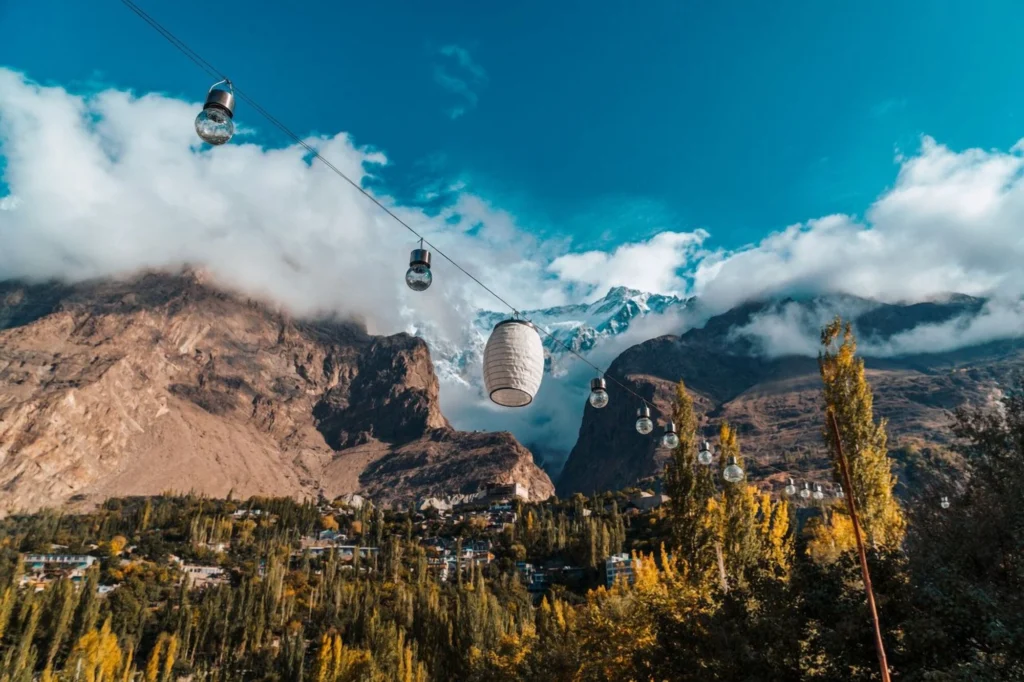
Planning a trip to Hunza Valley? The best time to visit depends on what you want to experience: spring blossoms, green summer landscapes, high mountain passes, or the golden colours of autumn. This month-by-month Hunza travel guide explains seasonal conditions, places to visit, travel routes, budget planning and what to check before leaving Islamabad or another city in Pakistan.
Hunza is a mountainous valley in Gilgit-Baltistan, known for dramatic Karakoram scenery, traditional settlements, historic forts and views of peaks such as Rakaposhi and Ultar Sar. The Directorate of Tourist Services Gilgit-Baltistan lists May to October as a general visiting window, while reminding visitors that road access, altitude and transport options can vary by destination and season. Check official Gilgit-Baltistan destination guidance before setting dates.
Quick answer: When is the best time to visit Hunza Valley?
For many first-time visitors, May to October is the most practical period to consider. Choose spring for blossoms, June to August for a classic summer mountain trip, and late September to October for autumn colours and cooler weather. These are broad seasonal patterns, not guarantees: temperatures, snowfall, landslides, road closures and local conditions vary from year to year.
- Spring (March–April): a possible window for blossoms in lower settlements, with chilly weather and uncertain mountain access.
- May–June: a useful shoulder-season option for visitors seeking scenery before the busiest summer period.
- July–August: commonly chosen for summer holidays and trips to higher places, but traffic, accommodation demand and monsoon-related disruption may affect plans.
- September–October: attractive for autumn scenery and cooler days; nights get colder and access to high passes may become less predictable.
- November–February: a colder, more specialised trip. Plan around winter conditions and confirm every route and service before departure.
Hunza weather by month: What should you expect?
Hunza’s landscape includes settlements at different elevations, so weather in Karimabad may differ from conditions around Gulmit, Passu or a high mountain pass. Treat the following table as a planning framework rather than a forecast. For actual travel dates, check the Pakistan Meteorological Department and local administration updates.
| Month | Typical travel feel | Good fit for | Plan carefully for |
|---|---|---|---|
| January | Cold winter conditions | Experienced winter travellers and quiet village stays | Snow, icy roads, limited services and short daylight |
| February | Still wintry, with changeable conditions | Flexible trips focused on lower settlements | Weather-related disruption and heating availability |
| March | Early spring in some lower areas; cold higher up | Early blossom viewing when conditions align | Blossom timing varies; do not assume all trees are flowering |
| April | Spring transition | Orchard scenery and cultural visits | Cold nights and access to high-altitude routes |
| May | Spring moving toward summer | Scenery, villages and historic sites | Changing road and weather conditions |
| June | Often a practical start to the summer travel season | First-time visitors and photography | Confirm higher-route openings and local services |
| July | Peak summer travel period | Families, sightseeing and longer itineraries | Busy roads, advance hotel bookings and heavy rain disruption |
| August | Summer travel continues | Flexible sightseeing and selected outdoor activities | Holiday crowds, rain-related hazards and route changes |
| September | Transition toward autumn | Mountain views, quieter travel and photography | Falling temperatures and shorter days |
| October | Cooler weather and possible autumn colours | Autumn scenery and cultural stops | Very cold nights and seasonal changes to high-pass access |
| November | Winter transition | Only well-planned, flexible lower-valley trips | Snow, road conditions, reduced daylight and closures |
| December | Winter conditions | Travellers prepared for cold and disruptions | Confirm accommodation, heating, transport and road access |
Best time to visit Hunza for blossoms, summer views and autumn colours
Spring: March and April for blossom season
Spring can bring blossom to orchards in parts of Hunza, creating a striking contrast between pale flowers, stone villages and snow-covered peaks. The exact timing depends on elevation and that year’s temperatures, so there is no guaranteed date when the entire valley will be in bloom.
For a blossom-focused trip, keep your dates flexible where possible. Ask your accommodation or a locally based operator for recent observations from the specific villages you plan to visit. Pack layers, including a warm jacket for mornings and evenings. Roads to high-altitude locations can remain difficult even when lower settlements feel like spring.
Early summer: May and June for a balanced trip
May and June can suit travellers who want a mixture of landscapes, village walks, historical sites and scenic drives without automatically choosing the busiest school-holiday weeks. Conditions are still variable, however, particularly on routes toward high passes and remote valleys. Confirm that each planned stop is accessible before paying for a non-refundable booking.
Peak summer: July and August for a classic northern Pakistan holiday
Summer is a popular time to travel through Hunza because many visitors want a break from hotter lowland cities and hope to include more distant sightseeing stops. It can be a convenient season for a multi-day itinerary, but popularity also means you should reserve accommodation and transport early during busy periods.
Summer does not mean every mountain road is safe at every hour. Heavy rain can trigger landslides, flash flooding and other disruptions in mountainous areas. The Gilgit-Baltistan Tourism Department has advised travellers to check current road clearance and weather information from relevant authorities, avoid unnecessary night travel during bad weather, and stay away from vulnerable streams and landslide-prone slopes. Read the official Gilgit-Baltistan travel advisory.
Autumn: September and October for colour and photography
Autumn is appealing to photographers and travellers who prefer cooler days and changing leaf colours. The timing and intensity of colour differ between villages and years, so avoid planning an entire trip around a single predicted peak-colour date. A flexible schedule gives you more options if rain, snow or a road delay changes the plan.
By October, nights can be significantly colder than daytime conditions suggest. Check heating arrangements at your hotel, carry warm layers, and re-confirm access to high passes rather than relying on a previous year’s opening dates. For details specific to October, read our Hunza in October: road status and weather planning guide.
Winter: November to February for experienced, flexible travellers
Winter can offer quiet village stays and snow-covered views, but it requires more preparation than a standard sightseeing holiday. Some routes, businesses and outdoor activities may be limited by snow, ice or low temperatures. Do not assume a high pass, hotel, jeep service or planned excursion will be available simply because it was available in summer.
If you choose winter, confirm the whole chain of logistics: how you will arrive, whether the road is currently open, what happens if your vehicle is delayed, whether your accommodation has reliable heating, and whether you have enough flexibility to postpone a day trip. This season is best suited to travellers comfortable with changing plans.
Best places to visit in Hunza Valley
Hunza is not just one viewpoint. Allow enough time to experience its historic settlements, mountain scenery and the different landscapes along the Karakoram Highway. These are established visitor highlights listed in regional tourism information; confirm opening hours, access and any local restrictions before travelling.
1. Karimabad
Karimabad is a practical base for many first-time visitors. It offers access to village streets, local shops, food and views toward surrounding mountains. Stay long enough to explore on foot rather than treating the town as only a quick photo stop.
2. Baltit Fort
Baltit Fort is one of Hunza’s best-known heritage sites, set above Karimabad. It provides cultural context for the valley’s history and traditional architecture. Check current visiting hours and ticket arrangements with the site before you go.
3. Altit Fort and the old settlement
Altit Fort and the surrounding settlement offer another perspective on Hunza’s built heritage and community life. Plan time for a slower visit, respect local customs and ask before photographing residents or private property.
4. Attabad Lake
Attabad Lake is known for striking blue-green water surrounded by steep mountain slopes. Boat activities may be offered locally, but conditions and operators can change. Follow safety instructions, use appropriate flotation equipment where applicable, and do not enter the water or board a boat when conditions are unsafe.
5. Passu and the Passu Cones viewpoint
The sharp peaks near Passu are a popular subject for landscape photography. The wider Gojal area also offers scenic roadside stops and traditional settlements. Leave time for the drive, follow parking instructions and avoid standing in active traffic areas for photographs.
6. Khunjerab Pass
Khunjerab Pass is a high-altitude destination toward the China border and can be affected by severe weather and seasonal access rules. Do not treat a trip there as guaranteed. Before leaving, confirm the route is officially open, check any required permissions or procedures, and remember that high altitude and cold can affect visitors even on a short stop.
How many days do you need in Hunza?
The right trip length depends on your arrival method, road conditions and how many places you want to include. Long road journeys can take longer than expected, so keep arrival and departure days light.
3 days: A short Hunza introduction
- Day 1: Arrive, check in, rest and explore Karimabad if time and daylight allow.
- Day 2: Visit Baltit Fort, Altit Fort and nearby villages, adjusting to local opening times.
- Day 3: Choose a nearby scenic stop before departure, only if the road schedule permits.
This is a compact plan and may feel rushed if you are travelling by road from Islamabad. A flight-dependent plan should also include flexibility for weather-related schedule changes.
5 days: A more comfortable first visit
- Day 1: Travel to Hunza and settle in.
- Day 2: Explore Karimabad, Baltit Fort and local markets.
- Day 3: Visit Altit Fort and nearby settlements.
- Day 4: Travel toward Attabad Lake and Passu, subject to road and weather conditions.
- Day 5: Enjoy a flexible morning and begin the return journey or connect to your next destination.
Do not squeeze Khunjerab Pass into this itinerary unless your transport plan, daylight and current access conditions genuinely allow it. Remote routes can take longer than expected.
7 days: Hunza with room for changes
- Days 1–2: Travel, recover from the journey and explore Karimabad.
- Day 3: Visit Altit Fort and surrounding villages.
- Days 4–5: Explore Attabad Lake, Passu and selected Gojal stops if routes are open.
- Day 6: Use as a buffer day or consider a higher-altitude excursion after checking access.
- Day 7: Return or continue to another destination with a confirmed transport plan.
These are sample itineraries, not promises of travel times or access. Build the final schedule around the actual road status, daylight hours and transport availability on your dates.
How much does a Hunza trip cost in Pakistan?
The cost of a Hunza trip varies with departure city, group size, season, accommodation, transport choice and how many days you stay. Peak holiday dates and private vehicles can raise the total. Rather than relying on a single advertised price, request a written quote with inclusions and exclusions.
For a practical budget, calculate these categories separately:
- Transport: bus or flight costs, local transfers, fuel contributions, private vehicle or driver charges.
- Accommodation: room rate per night, number of rooms, heating, breakfast and extra-person charges.
- Food: meals, snacks and drinking water for each travel day.
- Activities: fort entry tickets, boating where available, local guides and any permitted excursions.
- Contingency: one additional night, a route change or a rebooked transfer if weather disrupts the plan.
Budget note: [VERIFY CURRENT PRICES BEFORE PUBLISHING: collect current transport quotes from Islamabad/Rawalpindi, representative hotel rates for Karimabad and Passu, meal costs, fort ticket prices and any activity fees. Add realistic low-to-high PKR ranges with the date checked, group size and what is included.] Prices change seasonally, so do not present an undated estimate as a current tariff.
How to reach Hunza Valley from Islamabad
Many visitors travel north from Islamabad by road through the Karakoram Highway corridor, while others use air travel to Gilgit when suitable flights are available and then continue by road. Each option has trade-offs.
By road
Road travel offers flexibility for scenic stops, but the journey is long and mountain conditions can change quickly. Choose a reliable driver familiar with the route, avoid unrealistic day plans, allow daylight for vulnerable sections where possible, and keep water, warm clothing, medicines and a charged phone accessible. Ask your driver or transport operator to verify closures before departure.
By air via Gilgit
Flying to Gilgit can reduce road time when flights operate, but mountain flights are weather-dependent and should not be treated as guaranteed. Confirm the airline’s current schedule and baggage rules, and avoid tight same-day connections to hotels or tours. Keep a buffer in case the flight is delayed or cancelled.
For a general overview of transport and seasonal trip planning, explore our Northern Pakistan travel guide. For visitors planning a longer trip around Skardu as well, see our Skardu travel guide.
What should you pack for Hunza?
Pack for changing temperatures rather than just the forecast in your departure city. Even in warmer months, evenings can be cool, and high-altitude stops may be much colder than the valley floor.
- Layered clothing, including a warm mid-layer and windproof or waterproof outer layer.
- Comfortable walking shoes with grip; sturdier footwear if you plan longer walks.
- Sun protection: sunglasses, sunscreen, a hat and lip balm.
- Personal medication, a small first-aid kit and any prescribed altitude-related guidance from a qualified clinician.
- Reusable water bottle, snacks, power bank, offline maps and copies of bookings.
- Cash for places where card payments or mobile signals may be unreliable.
- Respectful clothing and a willingness to follow local guidance at cultural and religious sites.
Road safety and responsible travel in Hunza
Mountain travel requires more than selecting a good hotel. Rain, snow, rockfall, landslides and flooding can affect routes with little notice. Check the forecast and road clearance immediately before travelling, then keep checking during the trip. The Government of Gilgit-Baltistan Tourism Department and the Pakistan Meteorological Department are useful starting points for official information; also follow local administration, road authorities and police instructions.
Do not stop beneath unstable slopes, beside swollen streams or on narrow road shoulders for photographs. Avoid night driving during bad weather, never cross a flooded stream, and accept a change of plan when local authorities or your driver advise against continuing. If you visit a high-altitude location, ascend gradually, stay hydrated and take symptoms such as severe headache, confusion or unusual breathlessness seriously.
Responsible visitors also reduce pressure on the valley: take rubbish back to suitable disposal points, avoid disturbing wildlife, ask permission before photographing people, respect private land and support local businesses where practical. Leave historic places and natural sites as you found them.
Frequently asked questions about visiting Hunza Valley
What is the best month to visit Hunza Valley?
There is no single best month for every traveller. May and June can work well for a general sightseeing trip, July and August are popular for summer holidays, and September and October can be attractive for autumn scenery. Choose based on your priorities and verify current conditions.
Can I visit Hunza in March or April?
It may be possible to visit lower settlements in spring, and some visitors travel for blossom season. Timing varies by elevation and weather, so confirm blossom conditions with a local source and check route access before booking.
Is Hunza worth visiting in October?
October can be appealing for cooler weather and autumn colours, but nights get colder and access to high passes can change. Check our October Hunza travel guide and verify road status for your exact dates.
How many days are enough for Hunza?
Three days can introduce you to Karimabad and nearby heritage sites, but five to seven days generally allow a more relaxed plan with time for Attabad Lake and Passu. Add buffer time if travelling by air or covering long distances by road.
Is Hunza safe for families?
Many families visit Hunza, but safety depends on current weather, route conditions, transport standards and the activities selected. Use reputable transport, keep children away from road edges and water hazards, and follow local advisories. No destination can be guaranteed safe under every condition.
Do I need a 4×4 to visit Hunza?
A 4×4 is not automatically necessary for every main-valley stop, but some remote routes and excursions may require an appropriate vehicle depending on conditions. Confirm the vehicle requirement for each planned destination with a local operator before departure.
Are Hunza road conditions available in real time?
Road status can change after rain, snowfall, rockfall or maintenance. Use current official updates from relevant road authorities, local administration and police. An older blog post or social media photo is not proof that a route is open today.
Plan your Hunza trip with Pak Peaks
The best time to visit Hunza is the time that matches your interests, budget and tolerance for changing mountain conditions. Spring can bring blossoms, summer supports a classic multi-stop holiday, and autumn offers cooler days and a different palette of landscapes. Whatever season you choose, build in flexibility, verify routes close to departure and avoid treating seasonal averages as guarantees.
Planning a trip from Islamabad or combining Hunza with other northern destinations? Explore the tour options at Pak Peaks Travels & Tours and request a tailored itinerary with clear inclusions, transport details and a realistic schedule. Before confirming, ask for the latest route checks and a written breakdown of what your package covers.
Sources and further planning
- Directorate of Tourist Services Gilgit-Baltistan: destinations and general travel tips
- Government of Gilgit-Baltistan: tourist travel advisory
- Pakistan Meteorological Department: weather information
- Related guide: Northern Pakistan travel guide
- Related guide: Autumn and winter travel in Hunza and Skardu
Editorial note: Seasonal descriptions are general planning guidance, not live weather or road reports. Verify access, prices, opening times and any required permissions before publication and again before travel.