
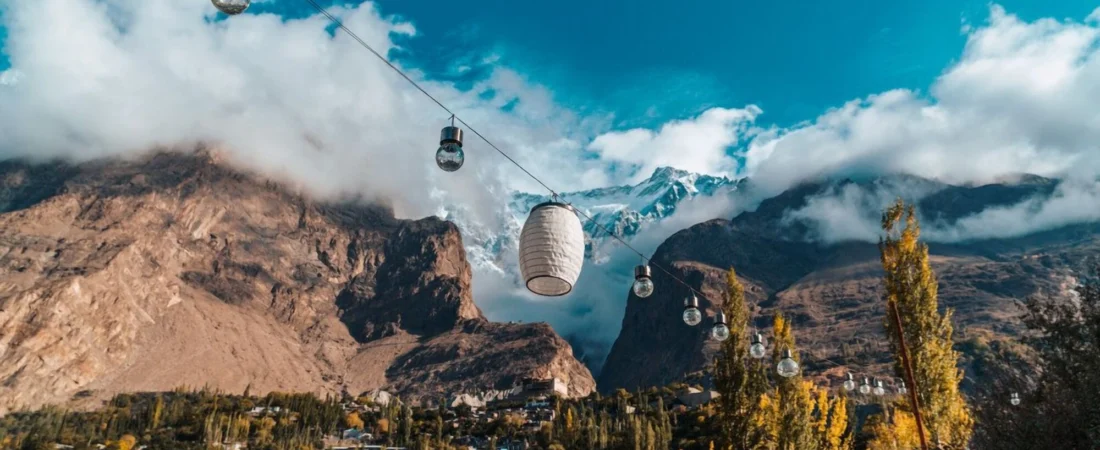
Planning a trip to Northern Pakistan? Start by choosing one main region, matching your dates to seasonal access, and allowing enough time for mountain-road journeys. For a first trip, Hunza works well for historic forts, villages and Karakoram Highway scenery; Skardu suits travellers who want lakes, high plains and access toward Deosai and the Karakoram trekking region. Combining both is possible, but it generally requires more days and a flexible transport plan.
This guide brings destinations, sample itineraries, route choices, budgeting, seasonal planning and safety checks together in one place. It is a planning guide, not a live road-status bulletin or a confirmed travel quotation. Conditions and prices can change quickly; use the official resources linked below and confirm details close to departure.
On this page
- Northern Pakistan at a glance
- Best places to visit
- Hunza vs Skardu
- Best time to visit
- 7-day, 10-day and 14-day itinerary ideas
- How to get there
- Trip costs and budgeting
- Where to stay
- Safety, packing and practical tips
- Frequently asked questions
- Official planning resources
Northern Pakistan at a glance
Northern Pakistan is not one single destination. It is a broad travel region that includes Gilgit-Baltistan and mountain destinations in parts of Khyber Pakhtunkhwa and Azad Jammu and Kashmir. Journey times, weather and access can differ substantially between valleys, so do not plan the whole region as though it were a short, continuous city break.
| Travel question | Practical starting point |
|---|---|
| First trip, about one week | Choose Hunza or Skardu as the main focus rather than trying to cover every famous valley. |
| About 10 days | Explore one region in depth, or combine nearby destinations after checking transfer times. |
| About two weeks | A combined Hunza–Skardu plan may be possible with carefully planned transfers and contingency time. |
| Best general travel window | Late spring through early autumn is often easier for many highland road trips, but the suitable window depends on altitude and route. |
| Road or flight? | Road travel provides flexibility and scenery but takes time; flights save travel time when operating and weather allows. |
| Before departure | Recheck weather, route status, transport schedules, accommodation and any local restrictions. |
For destination-specific details, continue to our Hunza Valley guide, Skardu travel guide and Fairy Meadows guide.
Best places to visit in Northern Pakistan
1. Hunza Valley
Hunza is a strong choice for travellers who want mountain scenery alongside local history and village life. Karimabad is a useful base for exploring the area, including Baltit Fort and Altit Fort. Further up the valley, travellers commonly plan visits around Attabad Lake, Gulmit, Passu and views of the distinctive Passu Cones. Khunjerab Pass is a high-altitude excursion whose access must be checked for the intended date.
Allow time for road travel between stops rather than assuming every attraction is a quick detour. The weather, road works and the pace of a group can change the order of a day. For autumn-to-winter planning, read our Hunza and Skardu seasonal guide and the Hunza road and weather planning article.
2. Skardu and the surrounding valleys
Skardu is a gateway to a different high-mountain landscape: lakes, a cold-desert environment, rocky viewpoints and journeys toward Shigar, Khaplu and Deosai when conditions permit. Popular planning stops include the Kachura lakes, Shangrila area, Sadpara Lake, Katpana Cold Desert and Kharpocho Fort. Distances and travel times can be longer than a map suggests, especially when you add side trips.
Deosai is a high plateau, not a year-round lowland day trip. Access is seasonal and can be affected by snow and road conditions. Check current regional guidance before building it into a fixed itinerary. Our Skardu guide provides a destination-specific starting point.
3. Fairy Meadows and Nanga Parbat viewpoints
Fairy Meadows is best suited to visitors who are comfortable with an adventure-oriented route and a walk at altitude. The journey commonly involves reaching the Raikot Bridge area, arranging local jeep transport toward Tato, then completing the trek on foot. Timing, weather, luggage and physical fitness matter more here than on a conventional road sightseeing trip.
Do not treat the jeep track or trek as ordinary urban transport. Confirm local operation, conditions, accommodation and whether the route is suitable for everyone in your group. Read the detailed Fairy Meadows guide before deciding.
4. Gilgit and Naltar Valley
Gilgit can function as a transit stop or a base for nearby excursions. Naltar Valley is known for mountain scenery and lakes, but access and local transport need to be checked for the dates you have in mind. If your trip relies on an onward connection, allow a buffer rather than scheduling every transfer back-to-back.
5. Astore and Deosai approaches
Astore can appeal to travellers looking for valleys and access toward high-altitude landscapes. The official Gilgit-Baltistan tourism site notes that routes in this region are affected by seasonal conditions and that flights to Gilgit or Skardu are weather-dependent. See the official Astore destination guidance and confirm whether a proposed approach is open before departure.
6. Naran–Kaghan, Swat, Kumrat and Neelum Valley
These destinations offer different landscapes and trip styles from Hunza and Skardu. Naran–Kaghan may fit a shorter journey from Islamabad when access is open; Swat and Kumrat offer forested valleys and river scenery; Neelum Valley is a separate route-planning choice in Azad Jammu and Kashmir. Do not assume that roads, seasonal opening dates or transfer times are the same across all these areas.
Hunza vs Skardu: which should you choose?
| Consideration | Hunza | Skardu |
|---|---|---|
| Often suits | Road trips, historic forts, villages, mountain viewpoints and a journey along the Karakoram Highway. | Lakes, high plains, cold-desert scenery and trips toward Deosai or trekking gateways. |
| Trip rhythm | Several day trips can be based around Karimabad and the upper valley. | Side trips may involve longer drives, local transfers or specialist transport. |
| Access planning | Usually planned by road via the Karakoram Highway; road conditions must be checked. | Can be reached by road or by flights when available; flight disruption needs a backup plan. |
| Seasonal questions | Check upper-valley and border-area access, temperatures and road conditions. | Check access to Deosai and other high-altitude routes, snowfall and local transport. |
| Suggested time | Allow roughly 4–7 days in the region if you want a relaxed first visit. | Allow roughly 4–7 days in the region if you want time for several local excursions. |
How to decide: choose Hunza if forts, villages and a scenic road trip are your priority. Choose Skardu if the high plateau, lakes and access toward Deosai are more important. With limited time, it is usually better to see one region thoughtfully than to spend most of the trip transferring between them.
Best time to visit Northern Pakistan
There is no single best month for every valley. Lower valleys, upper mountain roads and high-altitude plateaus can have different conditions on the same date. Use the following as a planning framework, then verify the route and forecast before committing.
| Period | What to consider | Planning approach |
|---|---|---|
| March–April | Spring conditions vary with altitude; some high routes may still be affected by snow or early-season access. | Prioritize destinations with confirmed access and keep the route flexible. |
| May–June | Many summer routes begin to become more practical, but higher passes can remain uncertain. | Verify opening notices and avoid relying on a seasonal assumption alone. |
| July–August | These are popular travel months, with heavy demand and possible rain, landslides or road disruption. | Book suitable accommodation early and leave contingency time for delays. |
| September–October | Autumn colours can be a draw in some valleys while nights get colder and high routes become less predictable. | Pack for temperature changes and check access for every side trip. |
| November–February | Winter conditions can restrict mountain access; snow, ice and shorter daylight affect transport and activities. | Choose winter-suitable destinations, check the latest warnings, and do not assume remote roads are open. |
The Gilgit-Baltistan tourism department’s destination information notes that summer is generally easier for access in some areas and that heavy snowfall can make winter travel difficult. That is a regional guide, not a guarantee for a specific road or date. Begin with the Gilgit-Baltistan Tourism Department and its travel advisories, then verify the latest forecast and road status.
7-day, 10-day and 14-day itinerary ideas
The plans below are frameworks, not guaranteed schedules. They distinguish time spent in the region from the time required to reach it from your home city. Long road journeys from Islamabad can consume more than one day each way, so add transit days and a weather buffer before treating a plan as a complete holiday.
7 days: focus on Hunza
| Day | Suggested plan |
|---|---|
| 1 | Arrive in Gilgit or Hunza, depending on your transport plan; keep the first evening light. |
| 2 | Explore Karimabad and the historic forts, allowing time for local meals and village walks. |
| 3 | Plan an Attabad Lake and Gulmit day, adjusting stops to road and weather conditions. |
| 4 | Explore Passu and nearby viewpoints; confirm the condition of any optional trail or side road. |
| 5 | Consider Khunjerab Pass only if access, weather and any local requirements are confirmed. |
| 6 | Keep a flexible day for Nagar, a shorter local excursion, photography or a rest day. |
| 7 | Begin the onward journey or return toward Gilgit for your confirmed connection. |
Important: this is a seven-day regional outline, not a promise that Islamabad-to-Islamabad travel fits inside seven days. If travelling by road from Islamabad, allow additional time or shorten the local route after checking actual transport schedules.
10 days: one region, a slower pace
- Days 1–2: Travel to the region and overnight where needed, based on the route selected.
- Days 3–6: Explore one base area, such as Hunza, with separate days for the forts, upper valley and lake viewpoints.
- Day 7: Keep a flexible day for weather-related changes or an excursion that needs extra time.
- Days 8–9: Add a nearby region only if the transfer is realistic, or use these days to explore the main destination without rushing.
- Day 10: Return or take the confirmed onward connection with a realistic buffer.
For a Skardu-focused version, use Skardu as the base and plan local excursions only after checking access to Deosai, Shigar, Khaplu or the lakes. Avoid promising that every side trip can fit into one day.
14 days: consider combining Hunza and Skardu
- Days 1–2: Travel north and allow for the chosen road or flight plan.
- Days 3–6: Explore Hunza, including time for Karimabad and upper-valley visits.
- Days 7–8: Transfer toward Skardu using a verified route and transport plan. Confirm road status before departure rather than assuming the transfer will be open.
- Days 9–11: Explore Skardu and nearby sights, choosing high-altitude excursions only if access is confirmed.
- Day 12: Keep a buffer day for weather or transport disruption.
- Days 13–14: Return or connect onward, based on confirmed transport and the departure point.
A combined itinerary can be rewarding, but do not commit to a tight connection between remote destinations. A flight schedule, road closure or weather interruption can change the best sequence. If a journey is fixed around an international flight, consider returning to the departure city with a larger buffer.
Getting to Northern Pakistan from Islamabad
By road
The Karakoram Highway is a major access corridor for travel toward Gilgit and Hunza. Road trips offer flexibility and stops along the way, but the driving time is long and can vary with weather, traffic, road works and overnight stops. The Babusar route is seasonal; do not assume it is open outside its operating window. Confirm the route currently advised for your travel date with local authorities and the transport provider.
For a family or group, compare the full journey rather than just the advertised vehicle price. Include the driver’s working hours, rest stops, luggage capacity, vehicle condition, accommodation along the way if needed and the cost of local vehicles on restricted tracks.
By air
Flights can reduce time on the road, particularly for trips centred on Skardu or Gilgit, but operations and fares are subject to schedules, availability and weather. Do not build an itinerary around a flight until you have a confirmed booking, and keep a plan for delays or cancellations. A flight that saves a day is not useful if the rest of the itinerary leaves no flexibility after a disruption.
Local transport
Depending on the destination, your transport may change from a coach or private vehicle to a local jeep or another suitable vehicle. Ask what is included in a tour quote and which sections require a separate transfer. For remote areas, check whether the local driver, guide, vehicle and accommodation are confirmed rather than assumed.
How much does a Northern Pakistan trip cost?
There is no honest single price for a Northern Pakistan trip without knowing the dates, group size, route, hotel standard and transport plan. A shared group tour can cost far less per person than hiring a private vehicle for a family, while flights and premium accommodation can substantially raise the total. Treat any advertised “from” price as a starting point and compare inclusions before booking.
| Budget line | What to include | What to verify |
|---|---|---|
| Intercity transport | Bus or flight tickets, airport transfers, road transport and overnight stop if needed. | Exact date, luggage rules, refund terms, schedule and disruption policy. |
| Local transport | Private vehicle or shared transport, fuel, driver expenses and local jeep sections. | Which sights are included and where a vehicle change is required. |
| Accommodation | Rooms, nights, number of people sharing, taxes and meal plan. | Live availability, room type, heating, hot water and cancellation terms. |
| Food and drinks | Meals, drinking water, snacks and meals during long transfer days. | Whether breakfast or dinner is included in the hotel or tour package. |
| Activities | Entry fees, boating, guides, local transfers and optional experiences. | Current operating conditions, published fees and what is included. |
| Safety buffer | Emergency funds and possible additional accommodation or transport. | Keep funds for delays; do not spend the entire budget on the base itinerary. |
Build a realistic estimate: calculate the whole-group transport total, multiply room rates by nights and rooms, add food and planned activities, then include a contingency reserve. Divide by the number of travellers only after adding shared costs. Remember that a low per-person quote may depend on a large group or shared rooms.
Illustrative public price checks (reviewed 23 October 2026)
The following figures are recent online listing examples, not Pak Peaks prices, a fixed quotation, or a reliable market-wide average. They demonstrate why a trip budget must use the exact travel dates and package inclusions. Recheck all prices with the provider before booking.
| Example | Published listing snapshot | How to interpret it |
|---|---|---|
| Islamabad–Hunza bus fare | Approximately PKR 4,850–5,200 one way on a third-party fare guide. | Ticket type, operator, date, luggage rules and availability must be reconfirmed. This is transport only, not a complete trip budget. |
| Islamabad–Skardu flight | A flight aggregator displayed a one-way fare from about PKR 16,015 for 31 October 2026 when checked on 23 October 2026. | This is date-specific inventory, not a typical fare or guarantee. The price may disappear or change, and flights remain subject to operation and weather. |
| Six-day guided Hunza package | One operator listed a starting price of PKR 28,500 per person, with transport, accommodation and selected meals stated among the inclusions. | Check the operator’s full written inclusions and exclusions. Do not compare the starting price directly with a private tour or a package with different hotel standards. |
| Five- to seven-day Hunza packages | Another travel company published 2026 guide ranges of PKR 35,000–55,000 for budget group tours, PKR 60,000–90,000 for standard tours, and PKR 120,000–200,000 for private/family packages. | These are that provider’s indicative ranges and may reflect different transport, room sharing and service levels. They are not a universal Northern Pakistan price range. |
Reference listings: Islamabad–Hunza bus fare guide, Islamabad–Skardu flight fare calendar, Naya Safar’s 2026 tour-cost guide and Go With Guide’s Hunza package-cost guide. Listing figures are subject to change and should be rechecked at booking time.
Use the Pak Peaks Northern Pakistan Trip Cost Calculator to work with your own expected rates. It is an editable planning estimate, not a live quote. If you need help balancing route, hotel and transport options, see our travel-planning services. Ask for a written quote listing inclusions, exclusions, cancellation terms and supplier arrangements. Our guide on choosing a travel and tours operator explains what to compare.
Where to stay and how to choose a base
Choose accommodation based on the route you want to explore, not only the photos or nightly rate. In Hunza, staying around Karimabad can make the forts and several nearby attractions more convenient; upper-valley plans may benefit from an overnight closer to the next day’s route. In Skardu, select a base that matches the excursions you intend to make and confirm the transfer times in advance.
Before booking, check recent guest feedback, room occupancy, bathroom and heating arrangements, hot water, meal options, road access, cancellation terms and whether the property is open during your dates. In shoulder and winter seasons, confirm availability directly. A cheaper room far from your intended stops can raise the overall transport cost.
Planning for families, couples, solo travellers and groups
- Families: plan shorter days, rest stops, suitable rooms and alternative activities in case weather affects a high-altitude excursion.
- Couples: decide whether the priority is a relaxed stay, scenic drives or a multi-stop route. Avoid overloading the day with photo stops spread across distant valleys.
- Solo travellers: confirm onward transport before arrival, share your intended route with someone you trust and avoid assuming a remote transfer will be available at any hour.
- Student and corporate groups: check vehicle capacity, supervision, meal stops, pickup arrangements, emergency contacts and written cancellation terms before collecting final payments.
- Adventure travellers: research altitude, required fitness, specialist gear, local guiding and permits or restrictions for the exact activity. A sightseeing itinerary is not an expedition plan.
Packing, weather and safety essentials
Pack for changing temperatures
Even when a lower valley feels warm, evenings and higher elevations can be cold. Bring layered clothing, a windproof or waterproof outer layer, sturdy footwear appropriate to your activities, sun protection, personal medicines, a refillable water bottle and any specialist gear your itinerary requires. Check the forecast for each overnight location rather than relying on the forecast for Islamabad or Gilgit alone.
Leave room for road and weather changes
Rain, snowfall, landslides, flooding and road work can delay or close mountain routes. Check official advisories shortly before departure and again during the trip. Avoid driving through floodwater, travelling on a route that authorities have closed, or continuing when visibility or road conditions are unsafe. If the route changes, make a fresh plan instead of trying to preserve a fixed schedule at all costs.
The National Disaster Management Authority has issued safety advisories for visitors to hilly areas during rain and snowfall, including warnings about hazardous winter road conditions. Review the latest notices on the NDMA website and use the Gilgit-Baltistan tourism travel-advisory page for local notices. These pages may change; an old notice is not proof of current road status.
Plan for connectivity and payments
Mobile signal and data coverage can vary along mountain roads and in remote valleys. Download maps and booking details for offline access, keep important phone numbers accessible, and tell your travel companion or host if your route changes. Carry enough cash for places that may not accept cards, but keep it secure and avoid carrying your entire trip budget in one place. Keep identity documents and booking confirmations available.
Respect local communities and the landscape
Ask before photographing people, homes or private property. Follow local guidance at religious and cultural sites, take litter back with you, stay on appropriate paths and avoid disturbing wildlife. Use local guides and services when they add genuine safety, cultural context or local economic value.
Frequently asked questions
What is the best place to visit first in Northern Pakistan?
Hunza is a practical first choice for travellers interested in mountain views, forts and villages. Skardu may be a better fit for lakes, high plains and access toward Deosai. The right choice depends on dates, available time, travel style and confirmed route access.
How many days are enough for Northern Pakistan?
One week can work for a single-region trip if you account for travel to and from the destination. Around 10 days allows a slower pace, while two weeks gives more flexibility for combining Hunza and Skardu. Long road transfers should be included in the day count.
Can I visit Hunza and Skardu in one trip?
Yes, in some itineraries, but a combined trip requires enough days and a verified transfer plan. Check the road status, transport schedule and backup options close to the travel date. Do not assume the road between regions or any flight connection will always be available.
Which month is best for Northern Pakistan?
Late spring through early autumn is a useful starting point for many trips, but there is no universal best month. The ideal timing differs for blossom, summer access, autumn colour and winter scenery, and high-altitude routes may open or close independently.
Is it safe to travel to Northern Pakistan in winter?
Winter travel can be possible in selected destinations, but snowfall, ice, shorter daylight and road closures make planning more demanding. Choose a route suited to winter conditions, check current official advisories, and be prepared to cancel or change an excursion if authorities or weather conditions indicate risk.
How much money should I budget?
Calculate transport, accommodation, food, local transfers, activities and a contingency reserve using current prices for your dates and group. Shared group trips and private family trips have very different cost structures. Use the Pak Peaks trip cost calculator with your own rates, then confirm supplier prices before booking.
Do I need to book hotels in advance?
Advance booking is helpful during busy periods and for small properties or specific room requirements. Confirm that the property is open, the room type matches your needs and the cancellation policy is clear, especially in shoulder or winter seasons.
Where can I check road conditions before leaving?
Start with the Gilgit-Baltistan Tourism Department, its published travel advisories and relevant local authorities. Also confirm directly with your driver or transport operator. Recheck close to departure because a previously published update may no longer reflect the current situation.
Can Pak Peaks help plan a custom itinerary?
Pak Peaks provides inquiry-led planning support for routes, transport and accommodation options across Northern Pakistan. Share your travel dates, starting city, group size, preferred destinations and budget range through the travel-planning page or the contact page. A request is not a confirmed booking; final details should be agreed in writing.
Official and useful trip-planning resources
- Gilgit-Baltistan Tourism Department — regional destination guidance and travel information.
- Gilgit-Baltistan travel advisories — local notices; check the date and whether an update has been superseded.
- National Disaster Management Authority (Pakistan) — disaster and weather-related safety notices.
- Pakistan Meteorological Department — official weather information and forecasts.
Plan a trip that fits your dates and pace
The best Northern Pakistan itinerary is not the one with the most pins on a map. It is the one that leaves enough time for the road, matches high-altitude excursions to the season, and gives you a sensible alternative when weather or access changes. Choose your main region first, budget using current prices and confirm the key details before departure.
To discuss a route, transport and accommodation options for your dates, visit Pak Peaks Travel Planning or send a travel enquiry.
Editorial note: This is a research-based planning guide, not a live travel advisory. Route status, schedules, access and rates must be confirmed close to the trip. Before publication, the site editor should add a named author/reviewer and verify current prices and route-specific details; no first-hand experience is claimed here.