
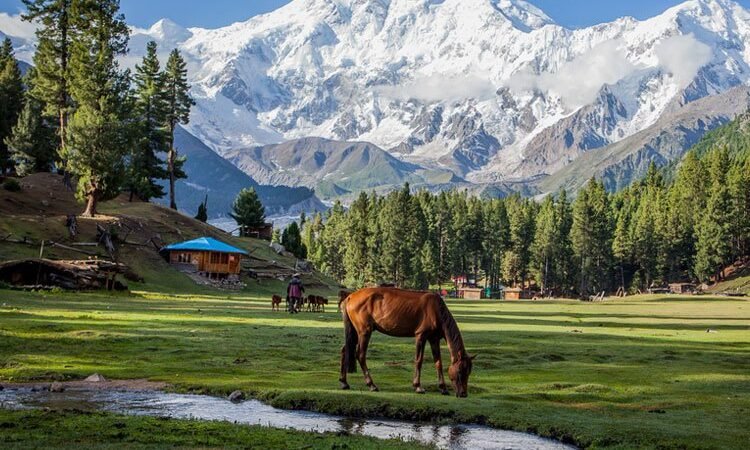
Pakistan is home to some of the world’s most dramatic mountain scenery, from the immense Karakoram peaks around the Baltoro Glacier to the Himalayan wall above the Indus River. For travellers, photographers and trekking enthusiasts, these mountains offer unforgettable landscapes—and for experienced mountaineers, some of the most demanding high-altitude objectives on Earth.
This guide to the top 10 mountains in Pakistan explains each peak’s elevation, mountain range, location and what makes it remarkable. Heights and rankings can differ slightly between references, especially where subsidiary summits are counted separately. This list focuses on well-known major peaks and uses commonly cited elevations.
Top 10 Highest Mountains in Pakistan: At a Glance
| Rank | Mountain | Elevation | Range |
|---|---|---|---|
| 1 | K2 | 8,611 m (28,251 ft) | Karakoram |
| 2 | Nanga Parbat | 8,126 m (26,660 ft) | Himalayas |
| 3 | Gasherbrum I | 8,080 m (26,509 ft) | Karakoram |
| 4 | Broad Peak | 8,051 m (26,414 ft) | Karakoram |
| 5 | Gasherbrum II | 8,035 m (26,362 ft) | Karakoram |
| 6 | Gasherbrum III | 7,952 m (26,089 ft) | Karakoram |
| 7 | Gasherbrum IV | 7,925 m (26,001 ft) | Karakoram |
| 8 | Distaghil Sar | 7,885 m (25,869 ft) | Karakoram |
| 9 | Kunyang Chhish | 7,852 m (25,761 ft) | Karakoram |
| 10 | Masherbrum | 7,821 m (25,659 ft) | Karakoram |
Note: Rankings vary between lists depending on how independent peaks and subsidiary summits are defined. This page focuses on major high summits and travel context. For a separate reference list of Pakistan’s highest mountains, see our highest mountains in Pakistan guide; note that the two pages cover overlapping topics, and rankings may vary depending on summit prominence and source.
1. K2 — 8,611 Metres
K2 is Pakistan’s highest mountain and the second-highest summit in the world. It rises in the Karakoram on the Pakistan–China border and is known for steep faces, exposed ridges, severe weather and technical difficulty. Its nickname, “Savage Mountain,” reflects the challenge of climbing it; an attempt is a serious expedition, not a conventional trek.
K2 is closely associated with the Baltoro Glacier and the route toward Concordia, a spectacular meeting point of glaciers surrounded by towering peaks. Travellers who do not intend to climb can still experience the broader Karakoram on a properly organised trek, but reaching the K2 Base Camp area requires time, fitness, acclimatisation and reliable local logistics.
Best for: experienced expedition climbers and well-prepared trekkers on the Baltoro route. K2 is not a beginner climb.
2. Nanga Parbat — 8,126 Metres
Nanga Parbat is the ninth-highest mountain in the world and the most prominent high peak of Pakistan’s Himalayan region. Its name is often translated as “Naked Mountain,” describing the immense, exposed mass rising above nearby valleys. The mountain is famous for its huge Rupal Face and dramatic views over the Indus region.
Located in Gilgit-Baltistan, Nanga Parbat is closely associated with trekking areas such as Fairy Meadows. The meadows provide a celebrated view of the mountain without requiring visitors to climb it. For access and trip-planning details, read our Fairy Meadows complete guide.
Best for: travellers seeking iconic Himalayan views and trekkers who want a mountain experience without attempting an extreme summit. Verify local access and conditions before departure.
3. Gasherbrum I — 8,080 Metres
Gasherbrum I, also known as Hidden Peak and historically referred to as K5, is one of the Karakoram’s great eight-thousand-metre mountains. It stands in the high border region near the Baltoro area, among immense glaciers and closely grouped summits.
Gasherbrum I is an expedition mountain. Reaching its climbing routes involves remote glacier travel, high camps, demanding weather and altitude exposure. It is not suitable for casual hikers. Its height and position among the region’s exceptionally high peaks make it important to Pakistan’s mountaineering identity.
Best for: experienced high-altitude mountaineers with appropriate expedition support.
4. Broad Peak — 8,051 Metres
Broad Peak takes its English name from the broad summit ridge that gives it a distinctive profile. It sits in the Karakoram near K2 and the Baltoro Glacier, amid glaciers, rocky moraines and towering ice-covered peaks.
Despite its name, Broad Peak remains a demanding eight-thousand-metre expedition. Climbers face thin air, cold, crevasses, avalanche exposure and rapidly changing conditions. Visitors trekking in the wider region should distinguish between viewing the mountain and attempting a technical summit.
Best for: specialist climbers; the broader Baltoro region is for experienced trekkers who are properly prepared and accompanied by qualified local support.
5. Gasherbrum II — 8,035 Metres
Gasherbrum II, sometimes called K4, is another of Pakistan’s five commonly recognised eight-thousand-metre peaks. It stands near Gasherbrum I and Broad Peak in the Karakoram. Its glaciated surroundings make it a familiar objective on expedition maps, but the altitude still brings serious risks.
Mountaineers must plan for acclimatisation, weather windows, glacier travel and the possibility of retreat. Even routes considered comparatively accessible among eight-thousand-metre objectives are not easy or safe for inexperienced climbers. For non-climbers, the wider Karakoram offers remarkable scenery but demands careful travel logistics.
Best for: experienced expedition climbers with high-altitude training and professional planning.
6. Gasherbrum III — 7,952 Metres
Gasherbrum III rises in the same high Karakoram cluster as the better-known Gasherbrum peaks. It appears in some lists of Pakistan’s highest summits, although ranking systems differ in how they treat subsidiary summits and topographic prominence. That is one reason published top-ten lists may not always match.
The peak lies in remote glaciated terrain where route-finding, crevasse awareness, acclimatisation and expedition experience are essential. It is an objective for highly experienced mountaineers rather than ordinary hikers.
Best for: specialist alpinists and expedition teams with relevant experience.
7. Gasherbrum IV — 7,925 Metres
Gasherbrum IV is known for its striking shape and difficult climbing history. In the Karakoram, its steep ridges rise above icefalls and high glacial basins. Its dramatic outline makes it one of the range’s visually distinctive summits.
The challenges extend well beyond physical fitness. Route conditions, rock and ice quality, weather, altitude and the remoteness of rescue all affect risk. A journey through the wider region should be planned around realistic trekking ability and current local conditions, not an assumption that a summit is accessible.
Best for: expert mountaineers; other visitors can appreciate the surrounding Karakoram on established routes without attempting this peak.
8. Distaghil Sar — 7,885 Metres
Distaghil Sar is the highest mountain in the Hispar Muztagh subrange of the Karakoram and one of Gilgit-Baltistan’s notable high peaks. It lies in a remote section of the range, away from familiar road-based tourist circuits. Its surrounding glaciers and immense ridgelines are important to experienced mountaineers and expedition planners.
Access is a logistical undertaking. Expeditions must account for long approaches, changing glacier conditions, transport, supplies and emergency planning. A mountain’s presence on a map does not mean it is straightforward to reach.
Best for: experienced expeditions and travellers undertaking remote, professionally planned journeys.
9. Kunyang Chhish — 7,852 Metres
Kunyang Chhish is a major Karakoram peak in the Hispar Muztagh region. Its height and remote position make it one of Pakistan’s significant high mountains, even though it receives less general tourist attention than K2 or Nanga Parbat. Around it, glaciers cut routes between enormous ridgelines.
For most visitors, the peak illustrates the extraordinary concentration of high mountains in northern Pakistan. Reaching its climbing routes is not a casual excursion; it requires specialist knowledge, relevant permissions, suitable equipment and careful expedition planning.
Best for: specialist climbers familiar with remote glaciated terrain.
10. Masherbrum — 7,821 Metres
Masherbrum, also known as K1, is one of the recognisable mountains in the Karakoram. Its sharply defined summit and imposing ridges make it a striking feature of the region. The K1 designation came from early surveying and mapping of the Karakoram.
Its technical difficulty and remote approach place it firmly in the expedition category. For visitors exploring northern Pakistan, Masherbrum is part of a broader story that also includes trekking routes, valleys and local communities supporting responsible tourism in Gilgit-Baltistan.
Best for: skilled mountaineers; other visitors should consider appropriate guided trekking and sightseeing itineraries.
Which Mountain Range Has the Highest Peaks in Pakistan?
The Karakoram contains most of Pakistan’s highest summits, including K2, Gasherbrum I, Broad Peak and Gasherbrum II. It is known for very high peaks and extensive glaciers. The Himalayas include Nanga Parbat, which rises above the Indus region. Farther west, the Hindu Kush includes Tirich Mir, around 7,708 metres, its best-known highest summit; it does not rank among the ten listed above.
Mountain names and elevations are only the starting point for planning. Road access, permits, weather, seasonal closures, fitness and the level of professional support required all matter.
Best Time to Visit the Mountains of Pakistan
For many trekking routes in Gilgit-Baltistan, the main travel season is generally late spring through early autumn, but the suitable period depends on route, altitude and current conditions. High-altitude expeditions have narrower weather windows and require specialist advice. Snow, landslides, road disruption and rapidly changing weather can affect access.
Check current local updates rather than relying only on a generic seasonal calendar. Our Hunza October road-status and weather guide explains why verification matters, while the Skardu travel guide provides additional planning context.
Can Tourists Climb Pakistan’s Highest Mountains?
Most visitors should enjoy these mountains from established viewpoints and trekking routes rather than attempt a summit. High-altitude climbing involves serious hazards, including altitude illness, severe cold, avalanches, falling ice and rock, crevasses and limited rescue options. Fitness alone is not sufficient preparation for an eight-thousand-metre expedition.
Choose a qualified, experienced operator, understand what is included, confirm permit and insurance requirements, and be prepared to change plans if conditions deteriorate. Our guide to choosing a travel and tours operator in Pakistan provides a checklist for evaluating providers.
Frequently Asked Questions About Pakistan’s Highest Mountains
What is the highest mountain in Pakistan?
K2 is Pakistan’s highest mountain at 8,611 metres (28,251 feet) and the world’s second-highest peak.
How many mountains in Pakistan are over 8,000 metres?
Pakistan is commonly recognised as having five eight-thousand-metre peaks: K2, Nanga Parbat, Gasherbrum I, Broad Peak and Gasherbrum II.
Which high mountain is best for a scenic trek?
The Fairy Meadows area offers a famous viewpoint of Nanga Parbat without requiring a summit attempt. Difficulty, access and conditions vary, so check local advice and read our Fairy Meadows guide.
Are these mountains safe for beginners?
The listed summits are not beginner climbing objectives. Beginners may enjoy suitable valley walks or guided trekking routes, depending on fitness and conditions, but should not attempt technical high-altitude climbs without substantial training and qualified expedition support.
Plan Your Northern Pakistan Trip
Pakistan’s highest mountains combine extraordinary scenery with demanding environments. Whether your interest is a viewpoint trek, a journey through Skardu and Gilgit-Baltistan, or learning about high-altitude mountaineering, research your route carefully and make decisions based on current local information. Explore our Skardu travel advice and practical guides across Pak Peaks before you set off.